|
Scot funeral eulogy Here’s the long version of the eulogy I gave at Scot’s funeral. This was printed out on card and put into a folder with a few other bits for the family.
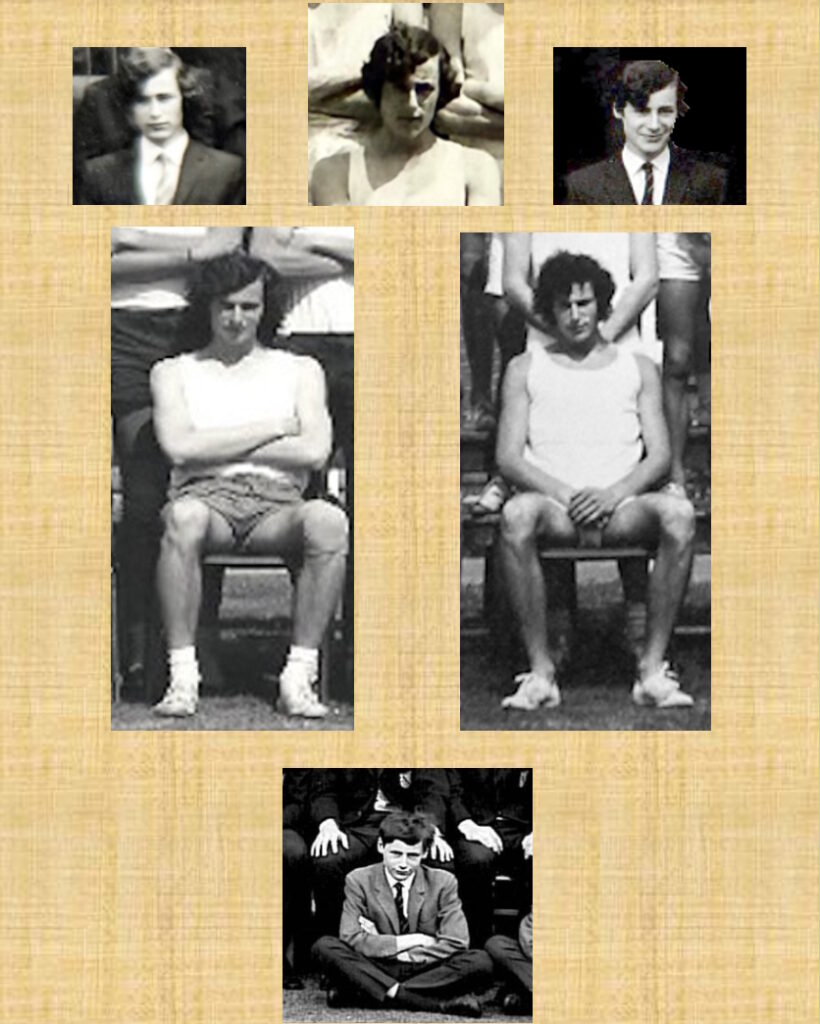
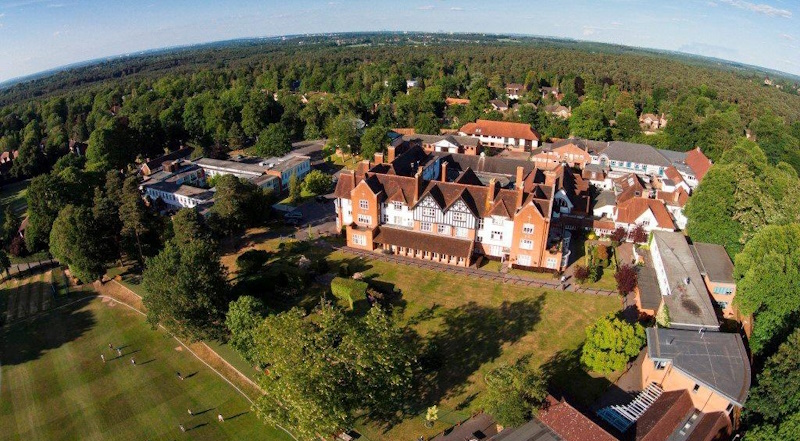
Before I start, let’s get something straight right away. Anything I say here is—as the lawyers would put it—without prejudice. In other words I never knew Scot the adult as you all knew him. We were schoolmates together long ago, comrades and friends, yes, but I can only speak to the things that happened then, and how we were during that time. Much has doubtless changed in the 50 years since. That said . . . Scot Martin Blyth and I first met at boarding school when we were both 11 years old. It was a small, relatively minor public school in Cobham, Surrey, went by the name of Reed’s. Some 50 or so of us shorts-wearing urchins spent our first two years in a house called The Close. This was set apart from the main school buildings, so each day we would trek up to the Big House for chapel, meals and lessons. In the second year, with numbers growing too big in The Close, a few of the boys were sent up early to board at the main school, and switch to the coveted long trousers. It was a measure of Scot’s early maturity that he was one of these. By now he was already showing athletic promise, the school magazine for 1969 noting that he placed 2nd in the under 13½ hurdles. As the years passed, this prowess blossomed. In 1972, while still a junior, he almost unprecedently won the school’s duodecathlon competition at the intermediate level (it’s a fearsome round of 20 separate disciplines over the entire term). And it wasn’t just athletics: by 1974 his sprint speed had guaranteed him a place on the wing in the school’s rugby 2nd XV, while as a right wing in hockey (as the end-of-year report had it “Blyth, when given the ball, showed how dangerous a traditional winger can be”) he was selected to represent Surrey county colts. The 1975 Sports Day results (our final year) are testament to his all-round ability: at the Open level he won both the 100 and 400 metre events, and placed 3rd in the javelin. By then Scot was into his second year as Captain of Athletics, having—almost uniquely—been appointed over more senior athletes a year above him. The school’s faith in his leadership was amply rewarded, as in 1975 the Reed’s athletics team was the only one unbeaten. And there’s that word: Leadership. For Scot was a born leader. I think it was partly down to his being a bit more mature than the rest of us—he seemed to have lived more, to have settled earlier on who he was. He would regale us with tales of summers spent on the Kintyre peninsula in the west of Scotland, of his girl in Machrihanish, of working on the fishing boats out of Campbeltown. It was all pretty heady adult stuff for us callow youngsters. Scot’s appointment in our final year as Captain of Capel House may have raised an eyebrow or two. But the truth is that someone higher up had spotted the pearl within the oyster, and the appointment was spot-on right. For Scot had an authority about him that was all the the more compelling for being quiet and measured. Going about his duties effectively and without fuss, and with a reputation for even-handed fairness, he quickly came to command the respect of the entire House. Scot had musical talent too. He took cello lessons from the first, played in the school orchestra, and his performance debut in a school music concert was noted in the school magazine as early as 1969. Typical of the man’s I-know-what-I-like certainties, Scot’s tastes in the music of the era didn’t follow the somewhat predictable path of most of the rest of us. You know, Deep Purple, Led Zeppelin, Uriah Heep. No, Scot’s tastes ran more to rock of the folkier kind, stuff like Traffic’s “John Barleycorn Must Die,” Lindisfarne’s “Fog on the Tyne,” the Doobie Brothers’ “Black Water.” Any of which might at the drop of a hat be belted out at maximum volume. Well, so far you might be getting a picture of a dutiful and capable young man of promise, a paragon perhaps of all the finer public school virtues. And yet . . . and yet . . . There was another side (actually several other sides) to the Scot I knew at school. So allow me to introduce you to Scot Blyth—social lion, Scot Blyth—girl-magnet, Scot Blyth—lawless tearaway hell-raiser. We were lucky in our year to have several dayboys who lived not far from the school. So of an afternoon it was easy enough for Scot to lead us all off to the nearby Fairmile Estate, there to snaffle all Kip’s mum’s iced buns, smoke all her cigarettes, and run up her phone bill. All of which I fear we did. Another lad’s parents had a big house near Guildford with pool, sauna, all the trimmings. They’d presumably given solemn assurances to the school authorities that we’d be properly monitored during our 5th-form weekend parties there. But in fact they retired to their own wing and left us to it. You can imagine the results. Yep, unfettered bacchanalia. Scot was needless to say central to much of the ensuing mayhem. Writing the Capel House end-of-year report in our final year, Scot penned the words: “success does not come easily, and it is only with hard all-round effort that it may be achieved.” I don’t know how it was later in life, but at Reed’s Scot certainly put in plenty of “hard all-round effort” when it came to the drinking. He was older than the rest of us, which meant his 18th birthday came round before anyone else’s—the age of course when one could legally down a few. So down a celebratory few we duly did, with Scot downing rather more than most. So much so that he was later to be seen comatose in a bathtub, in which he spent the next 18, yes, count them, 18 hours, checked on regularly by all, including our housemaster. Who never said a word, then or after . . . And so to girls. There’s no other way to say this: Scot was, frankly, a girl-magnet. Whether it was his undoubted good looks, his mature demeanour, his sharp wit, or his unbounded enjoyment of, well, enjoyment, Scot always seemed to be with the prettiest girl in the room. And while we all envied his many successes, some of us were nevertheless not too proud to, how shall I put it, surf in his wake. We’ll just leave that one there, shall we . . . ? Did I mention that this paragon of grown-up leadership qualities was not above a little mischief? Where to start? Well, you need to understand that these were different times. The Reed’s prospectus these days is chockful of stuff like “creating a nurturing environment” and “promoting personal growth.” Not much of that in our day, I can tell you-if you got caught doing something wrong back then, like as not you got caned. Scot got his share of this and more. In fact, in his email to the school asking for exemption from the numbers limit at the reunion, he mentioned that it was his daughters who wanted to see quote: “the dungeons where I was regularly beaten within an inch of my life” unquote. That may have been a bit of an exaggeration, but I’m here to tell you that 6 of the cane in your pyjamas hurts like you wouldn’t believe. The offences? Smoking was a perennial favourite (remember, we’re talking 50 years ago), missing chapel, repeated poor marks in class, getting caught in the masters-only pub (yes, it happened); these and many other egregious misdeeds would see you lined up outside the housemaster’s study, counting the whacks some other poor unfortunate was getting, in anticipation of your own turn. Did it reform us? Not a bit. I think we looked on caning as a sort of occupational hazard, with not a little pride if we could manage an apparently insouciant saunter back to the dorm, no matter that we were in agony and desperately holding back the tears . . . Sometimes you didn’t even have to have done anything wrong yourself. One of our year, replying to my contact about the reunion, thought his main claim to fame might have been, in his words, “setting fire to Scot Blyth’s arse during an English lesson.” For this the, ah, ars[e]onist received six of the best in front of the whole House, while Scot—for once a totally innocent victim—was given another four to add to his growing total. My housemaster confided to me just before I left that if a boy didn’t get whacked occasionally, the masters started to suspect there might be something wrong with him. There was nothing wrong with Scot . . . And that was it. School ended, and in 1975 we all went our separate ways.
Pass 50 years, 2025 rolls around, and I’m looking to get the band back together for a 50th anniversary reunion in late June. Our generation not being much for endless vapid social media chat, the only way to contact some folks was by finding an address for them in the online directories and writing them a letter. Which was what I did for one Scot M. Blyth back in February, sending letters to the two addresses I’d dug up. Nothing nothing nothing, until late in May I finally got an email reply. He was enthusiastic but doubtful, as an operation had been scheduled for early June, and he didn’t think he’d be recovered in time to attend. But then came news that the operation had been cancelled, so maybe it could be possible after all. Next hurdle was that the school had put a limit on one guest per invitee, and Scot wanted to bring his four children (you’ll recall the “daughters and dungeons” quote I mentioned earlier). Well, we know the rest. The school made an exception for him on compassionate grounds and—despite being gravely ill—Scot made the supreme effort to come to the Sunday reunion, wheelchair-bound and cocooned in the love of his family. Courageous to the last, he was determined to be there. And he was as sharp as ever. Just seven days later, he was gone. How privileged we all were to be able to be with him one more time.
I’ll leave you with two more Scot stories. These are from Steve Dewey, who kept close with Scot for some time after leaving Reed’s, even sharing a succession of flats and houses with him. Story #1 (as recounted to Steve by Scot himself, in what turned out to be their final chat at the Sunday reunion): Tomorrow is Monday, and it’s to be Scot’s first day in a new job, his first in the art world, so quite important. But it being a normal weekend night, as per SOP, drink is taken-lots of drink. Come Monday morning Scot is toast. Asking around for the best excuse not to go to work, his companion du jour, a nurse, suggests: “Scarlet Fever.” So ok, in goes the message: “I can’t come in to work today, I’ve got Scarlet Fever.” Finally turning up a couple of days later, Scot finds he’s been rumbled: “anyone suffering from Scarlet Fever, matey, wouldn’t have been at work for at least two weeks.” Yup, the nurse had pranked him. Good enough story on its own, but the real punchline is that—as he so often did—Scot got away with it. Story #2: It’s late at night, much drink has been taken, Steve has wobbled back to his car with Scot lagging far behind. Alas, on exiting said car earlier, Scot had knocked over the bottle of wine they’d been chugging on the drive in. The car stank like a pub bottle bin. Along comes plod, “hello hello, what’s all this then?” “Nothing your honour,” says Steve, “me and my friend only had a couple of beers, and the cork got lost somewhere.” Steve reckons he’s being persuasive and getting things sorted when suddenly a lurching shambles navigates the corner. It’s Scot. All eyes turn to this spectacle as he stops, takes in the scene and in a gesture of selfless moral support for Steve, lifts a pointing finger and laughingly slurs out at the top of his voice: “ha-ha, you’re busted!” Miraculously, Steve somehow blew a clean breathalyzer and drove them home. Even though Steve had every right to be livid with Scot, as always—another defining characteristic of the man—Scot’s winning charm wiped away any resentment. So they opened the whisky . . .
Well, that’s me done. I’ve barely scratched the surface of Scot Martin Blyth as I knew him at school, but hope I’ve maybe given you a flavour of this cheeky-faced lad as he grew into a dutifully responsible—and endearingly irresponsible—young adult. To Harrison and Will, to Lou and Jo, I say bless you all, you’re a credit to your old man. To Scot I say again, Safe Journey old friend, from all of us who knew you at Reed’s, go with our love. |